August 2026 – part 2 (16th to 31st)
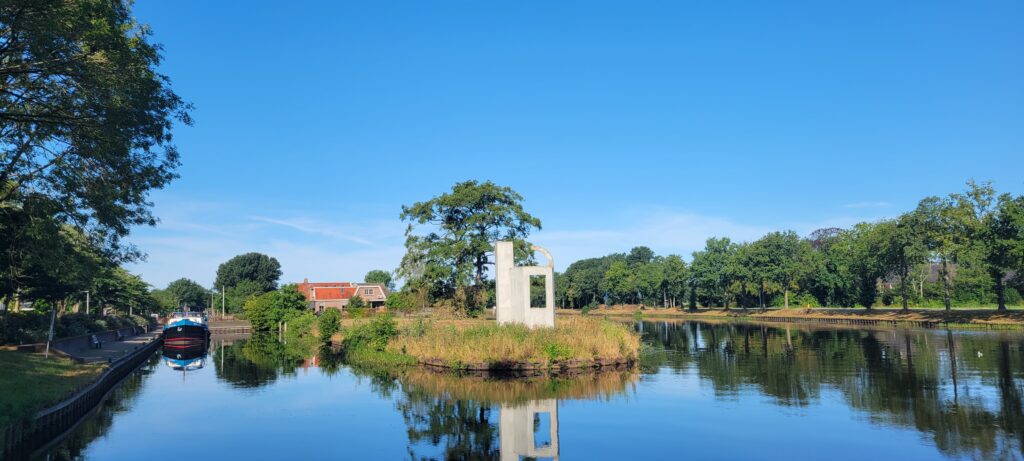
Having spent two nights (16/17) in the small Rogat harbour, it was only as we left that we spotted at its entrance a sculpture titled “Zomergasten” (Summer Guests), created “to serve as a guardian protecting travellers and passers-by who spend the night at the lock”.
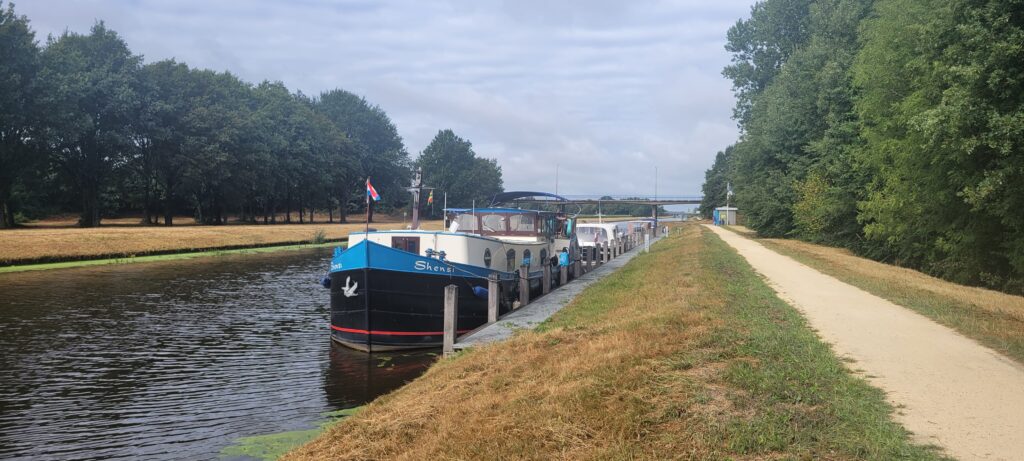
Now in the province of Drenthe, we continued the second half of August cruising along the Hoogeveense Vaart, aiming for the small town of Hoogeveen, where we and Lucy had driven to earlier in the year for Lucy to do a Z park run in Zuiderpark. This time though our mooring was right next to that very park, and we stayed for a couple of nights, using a little of the time to dismantle and store our new bimini for the coming winter.
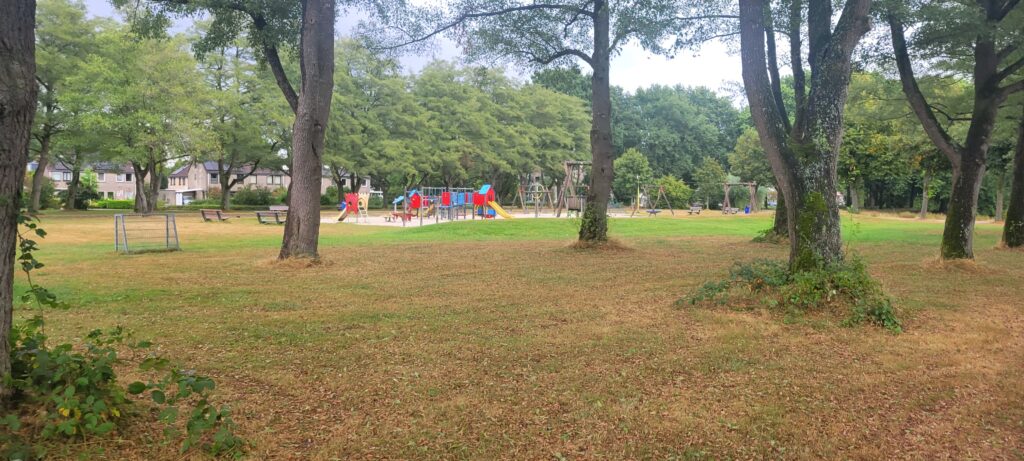
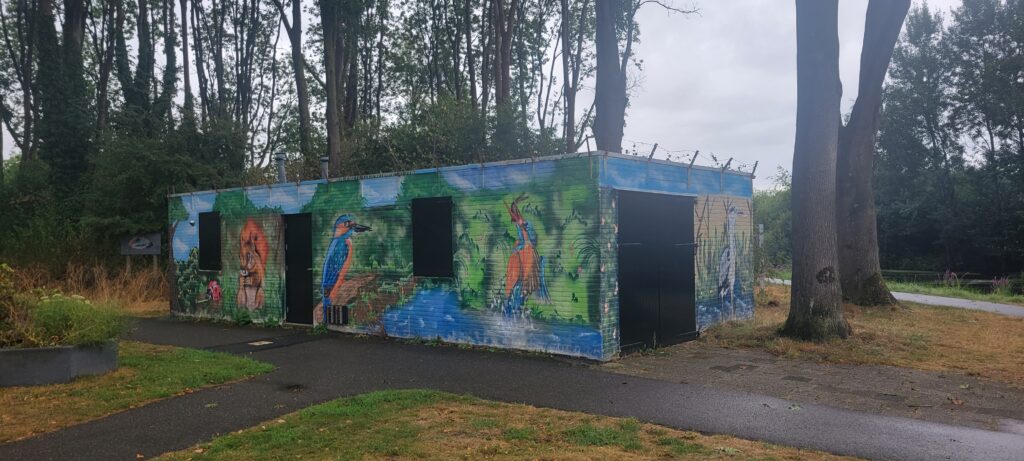
The weather was now beginning to finally turn, with cooler nights and some rain, and we departed Hoogeveen on 18th in rain which was quite a pleasant experience after so many weeks of exceedingly high temperatures. As we carried on along the Hoogeveensche Vaart we were briefly held up at the wonderfully eccentric Krakeelbrug, a seemingly mishmash of curves and wiggles.
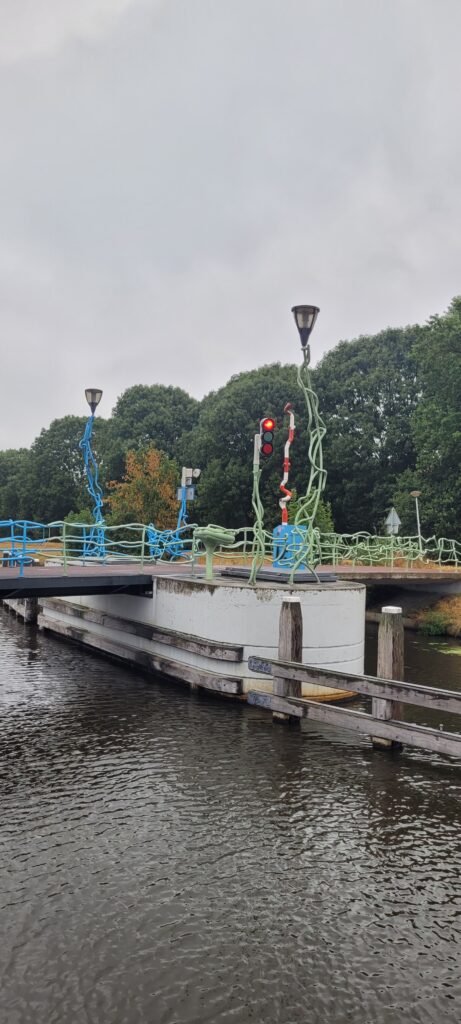
Note: On investigation, it appears that the Krakeelbrug was designed as “a visual timeline depicting the geological history and landscape evolution of Drenthe, transitioning from a rugged green section representing the last Ice Age into a lighter blue structure”.
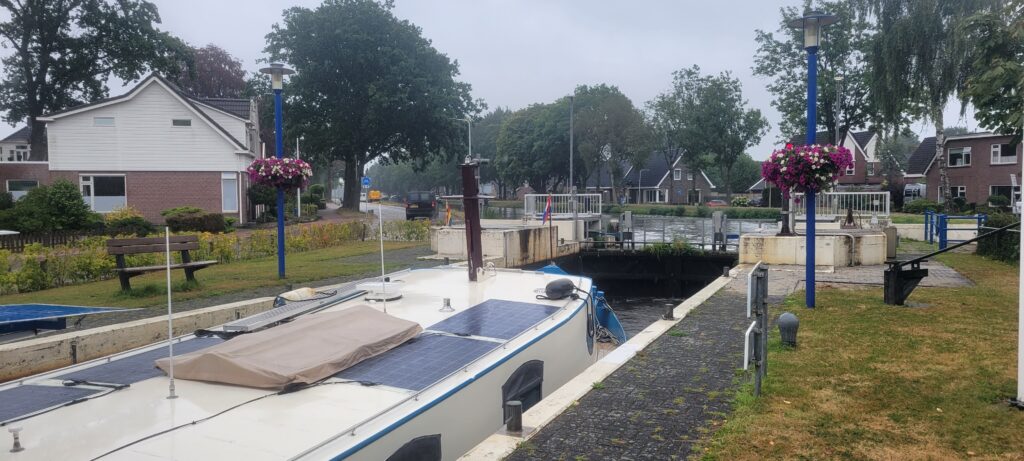
Once through the bridge, we headed into the town of Noordscheschut to pick up some shopping essentials – a whole half an hour visit in total – and then took off again to stop at Zwinderen.
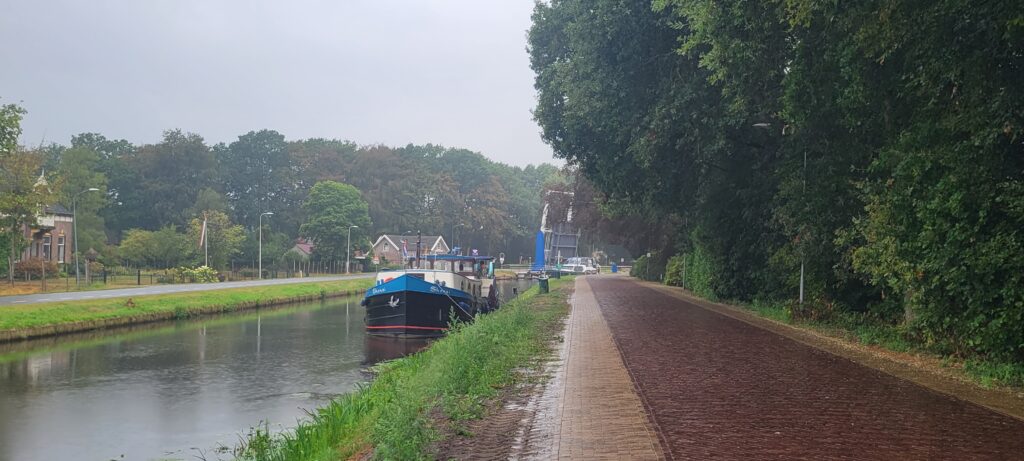
Apparently Utrecht (see our 2025 album) is not the only place where the welfare of fish are considered …. as we passed along the waterway in the Drenthe region, we came across another fish support system – a “fish lift” – installed to give fish a chance to swim as far as possible for their natural migratory and reproductive behaviours.
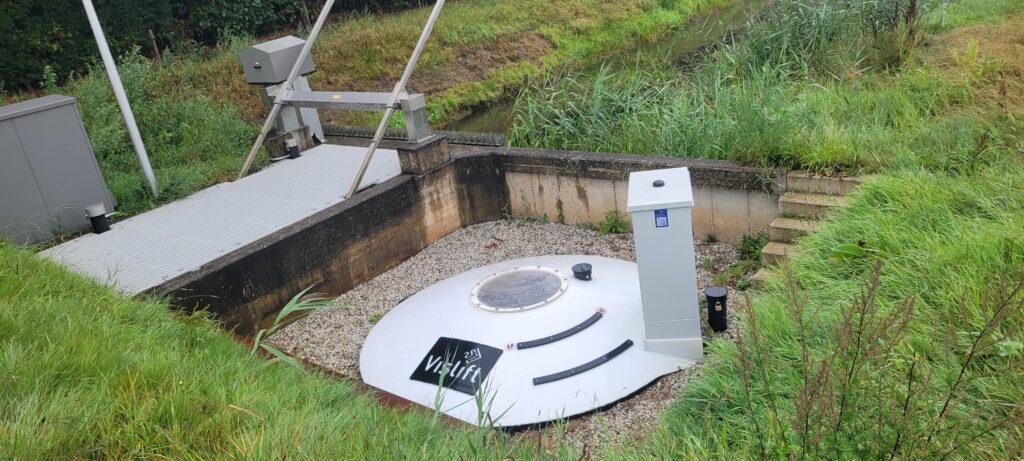
Note: In this region (Drenthe and Twente), compact, round prefab smart fish lifts (visliften) have been installed to assist fish along the waterways, as they regularly encounter quite a few obstacles while swimming from weirs and pumping stations to locks and narrow grids. The lifts operate with a specialized water current which lures fish into the structure. Once inside there is a spiral passage, which fish navigate upward via a compact internal vertical route. The lifts are monitored 24/7 by sensors which track migration data, water temperature, and water levels, and built-in sensors and cameras track passing species in real time, confirming that diverse native fish successfully use the vertical transport and flow-optimized channels, which fit into compact footprints near existing waterworks, making them a practical alternative to traditional sloping fish passes in crowded Dutch polder landscapes.
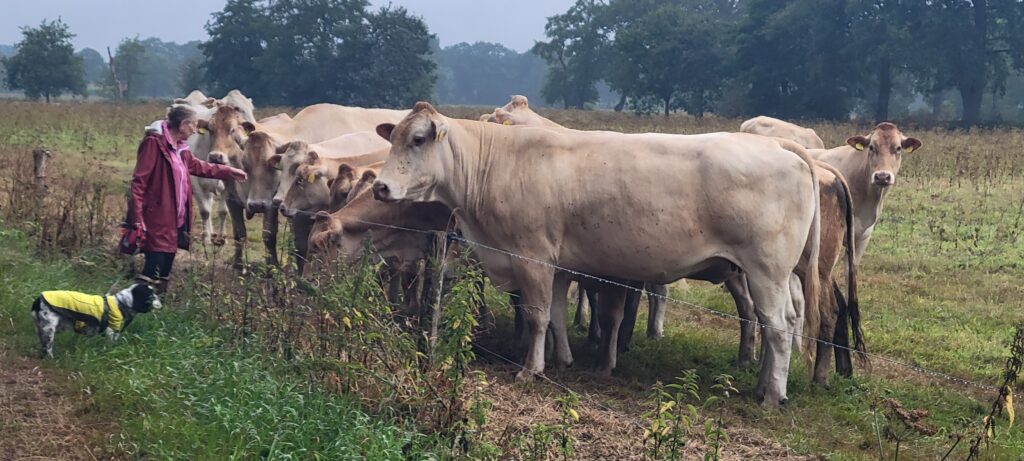
The Zwinderen mooring proved to be fairly noisy with tractors and buses passing regularly during the day, so we only stayed the one night. From there we moved on to Nieuwe Amsterdam.
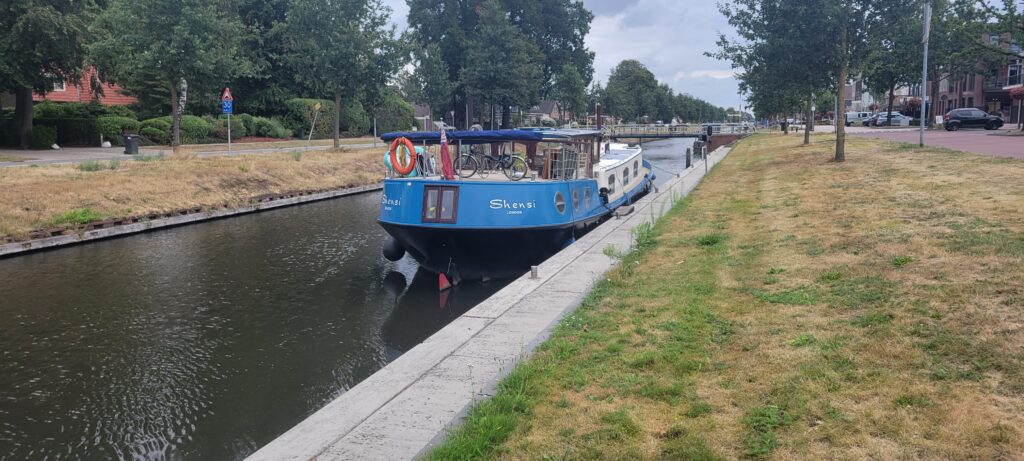
Approaching the town, we knew we would have to hang around for a rail bridge to be lifted, so we slowly crept along the waterway towards it. And just as we decided to throw out some ropes to hold off and wait, the bridge was opened and we were through with barely a hiccup. Once there we picked our spot and moored up close to the next bridge, almost equidistant between supermarkets and next to the town ‘centre’ (just a line of shops lining the canal) and a decent dog walking area. We stayed there for three nights, setting off at 1pm when the bridge keepers returned from lunch. From Nieuwe Amsterdam we continued along the Verlengde Hoogeveensche Vaart, through the small town of Erica, turning into the Vanechtenskanaal and then again into the Oranjekanaal.
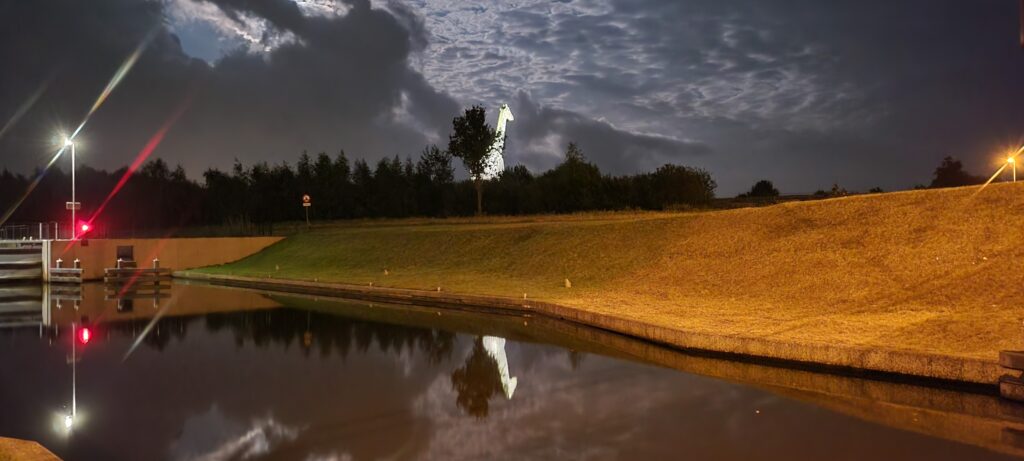
Just a little further along we made our final turn of the day into the small Oosterwijk waterway, coming to rest in Oranjedorp, a peaceful, restful mooring (overlooked by a giant giraffe) where we spent the next two nights. Here I had a slight accident when I fell off the boat, catching and breaking the set of wooden steps as I went!
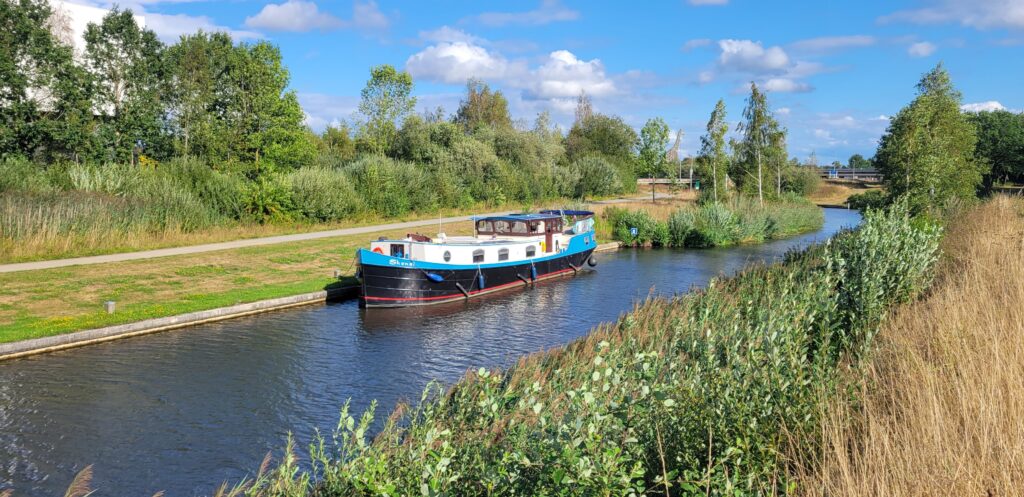
Now on 24th August, we began our journey by reversing out of the Oosterwijk, through the Spaarsluis (manned but automatic) and out onto the Koning Willem Alenderkanaal on a very pleasant, warm day.
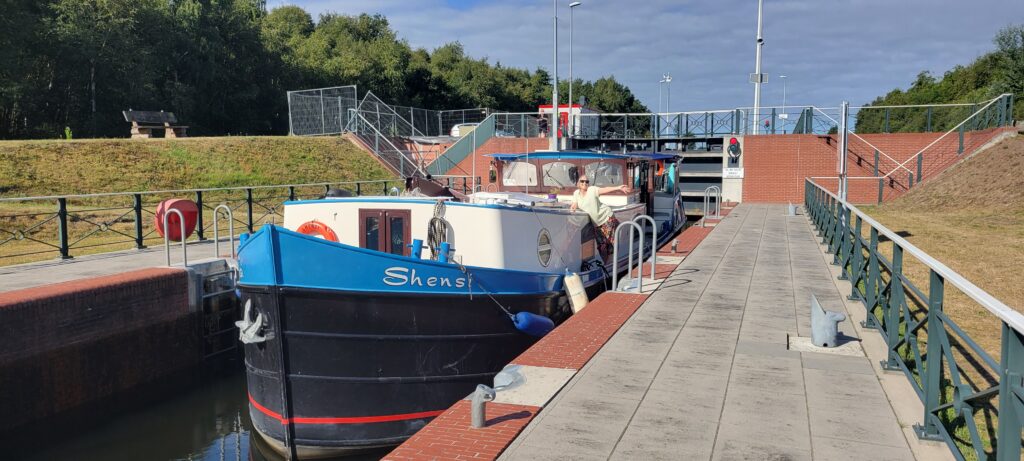
An interesting lock that we passed through was the Koppelsluis on the Koning Willem-Alexanderkanaal, which is “a unique double lock system that bridges a total height difference of 5 meters (16.4 feet) in two connected steps of 2.5 meters each”.
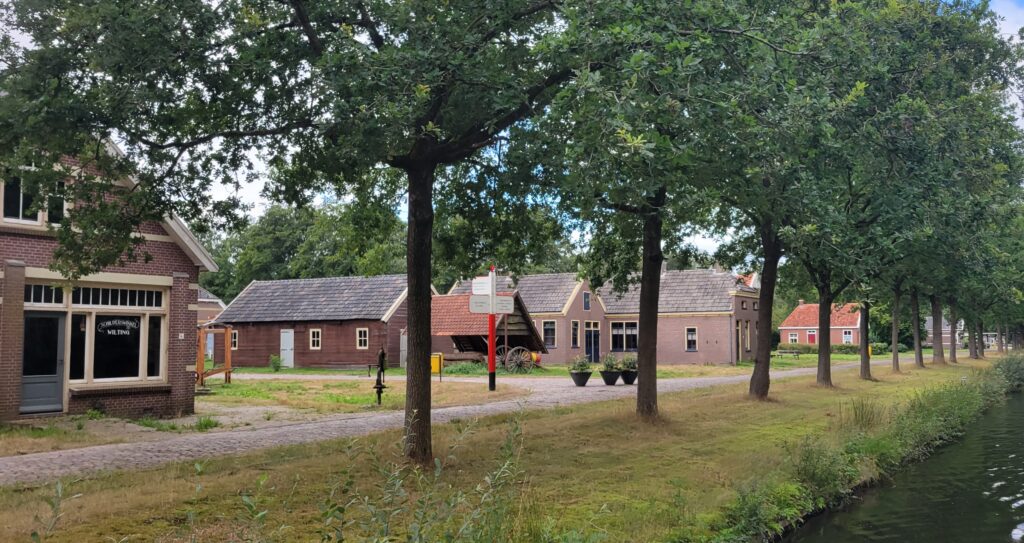
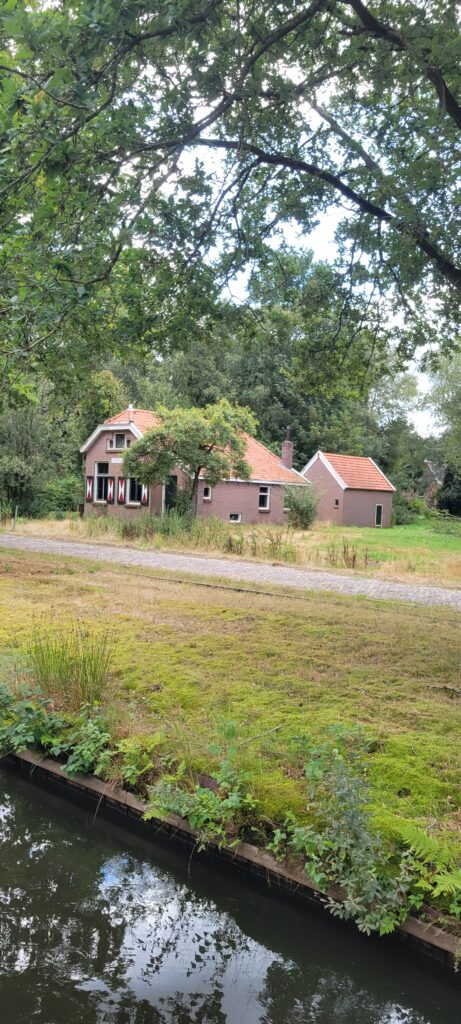
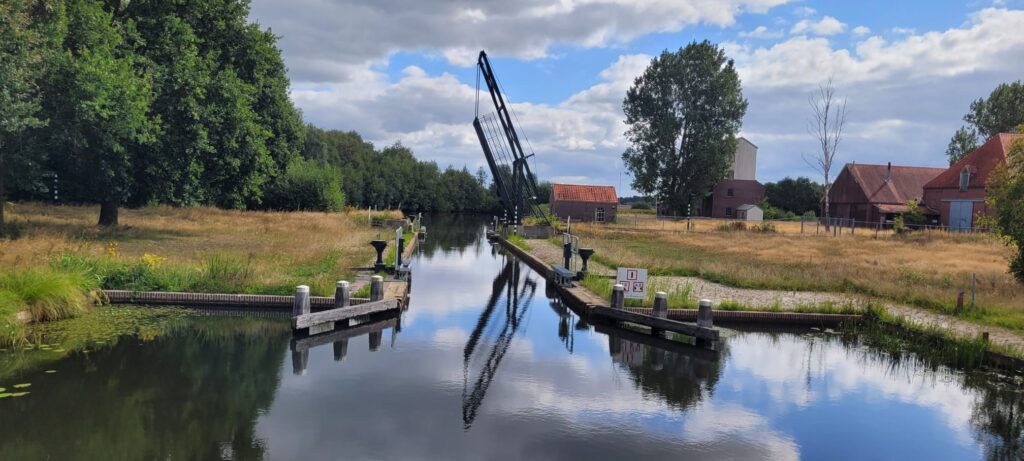
We don’t often record all the waterways we pass along, but out of interest this particular route took us out of the Oosterwijk onto the Koning Willem Alexanderkanaal, onto the Scholtenskanaal and then onto the Veenpark kanaal, where we passed through Veenpark itself, a park showcasing a large open-air museum about peat extraction in Drenthe and the hard life of peat workers around 1900. Sadly the park closed down last year, but it is scheduled to re-open again in 2027, but currently as we passed along the canal we could still see some of the old crafts, machinery, sod huts, the narrow-gauge train and a peat barge, along with some original buildings from that time, such as a church, school, blacksmith forge, a traditional pub, a windmill, and a bakery. A selection of photographs as we passed through Veenpark follows ….
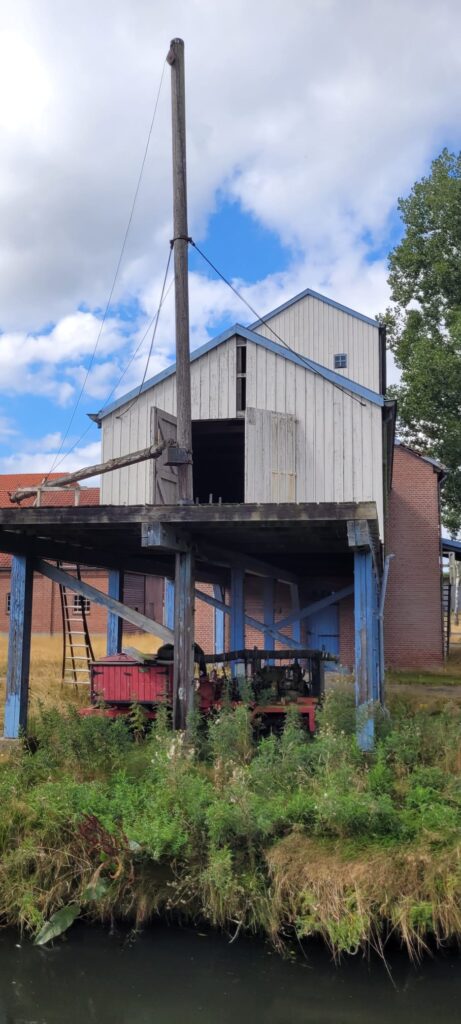
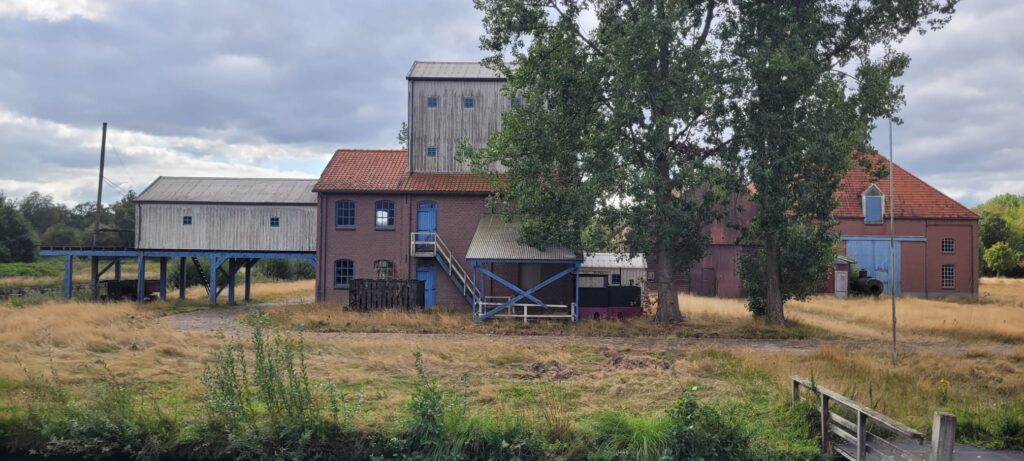
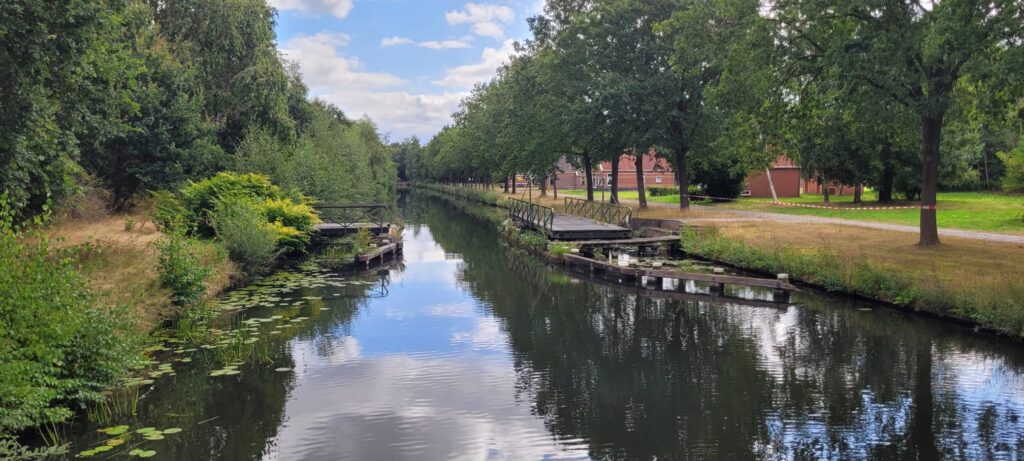
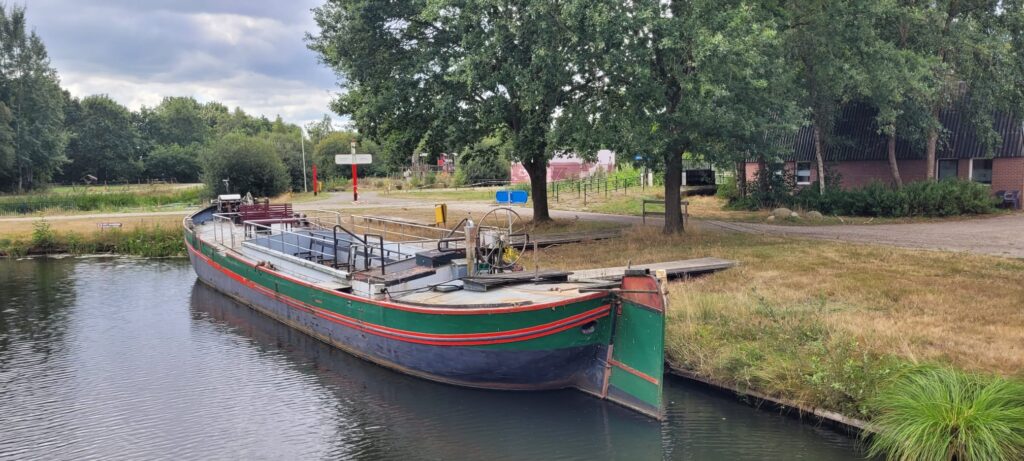
Continuing on, we passed along the Oosterdiep, Compascuumkanaal and finally turned into the Stads-Compascuumkanaal to moor at Emmer-Compascuum … all that in a fun-filled five hour day! Sadly towards the end of the journey we had a nasty bump in our final lock due in large part to the lock-keepers (and there were four of them hanging around) – one lock keeper wanted to squeeze a cruiser in behind us, and gestured that we should keep moving forward towards the gates, only for us to hear a loud bang as we hit a protruding section of the quay. Fortunately there was little impact to the steel hull, but that was not really the point.
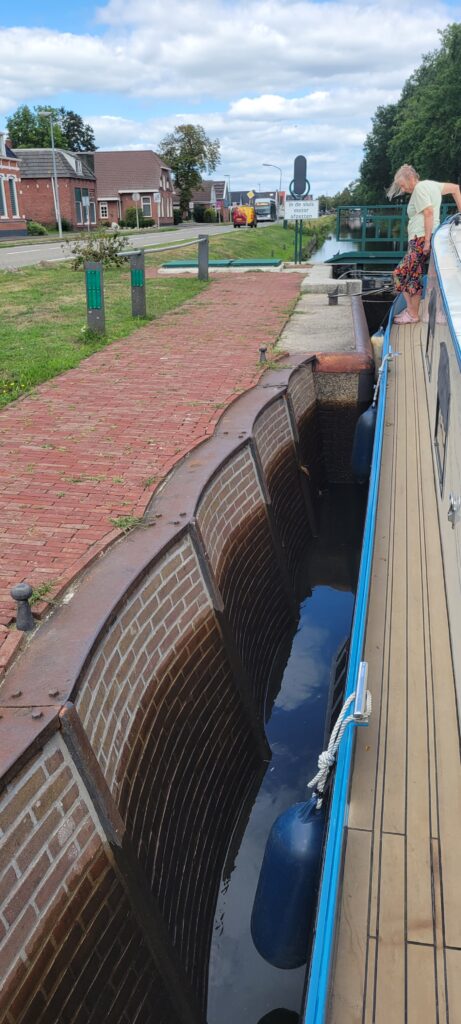
Finally we reached a stretch of mooring for that night, and settled ourselves in. A little later another boating couple knocked on our door – the lady had noticed that Shensi was listed in the WOB register (a Women on Board Facebook group) and she and her husband (Lineke and André off Caroline) had popped by just to say hello. That turned into a pleasant evening together onboard Shensi, followed by a visit to their boat in the morning for coffee.
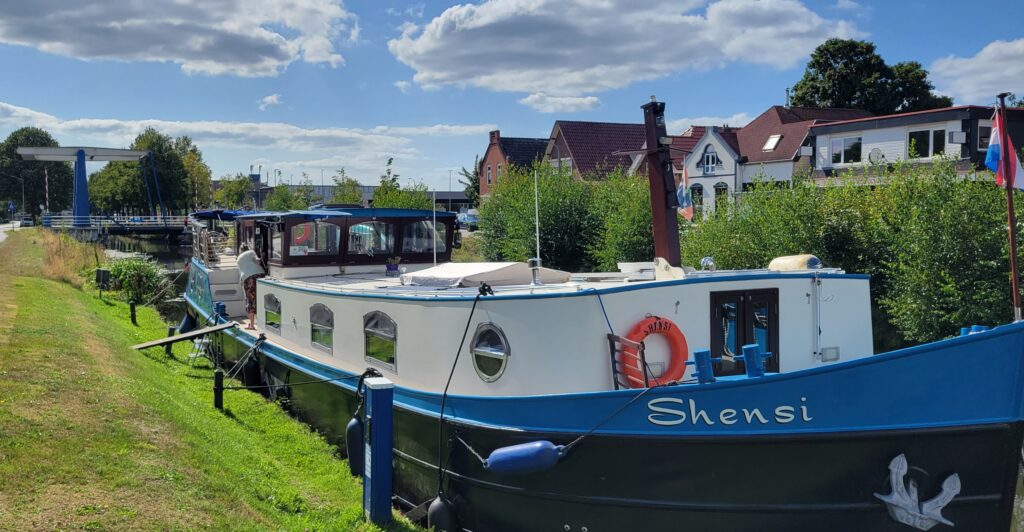
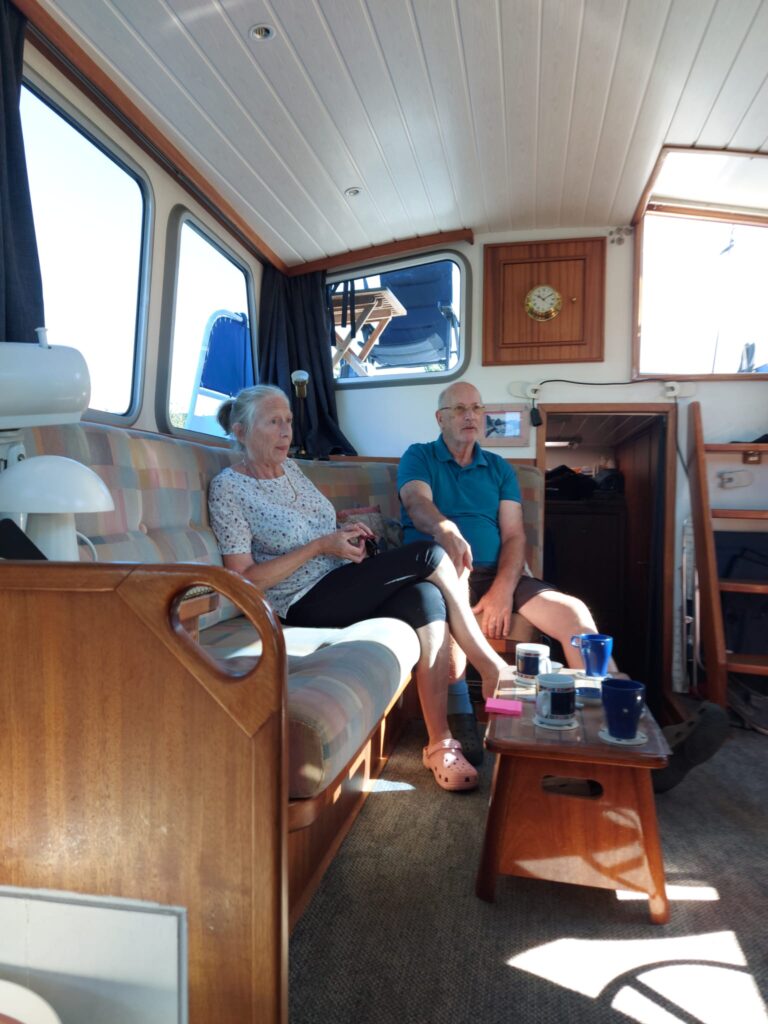
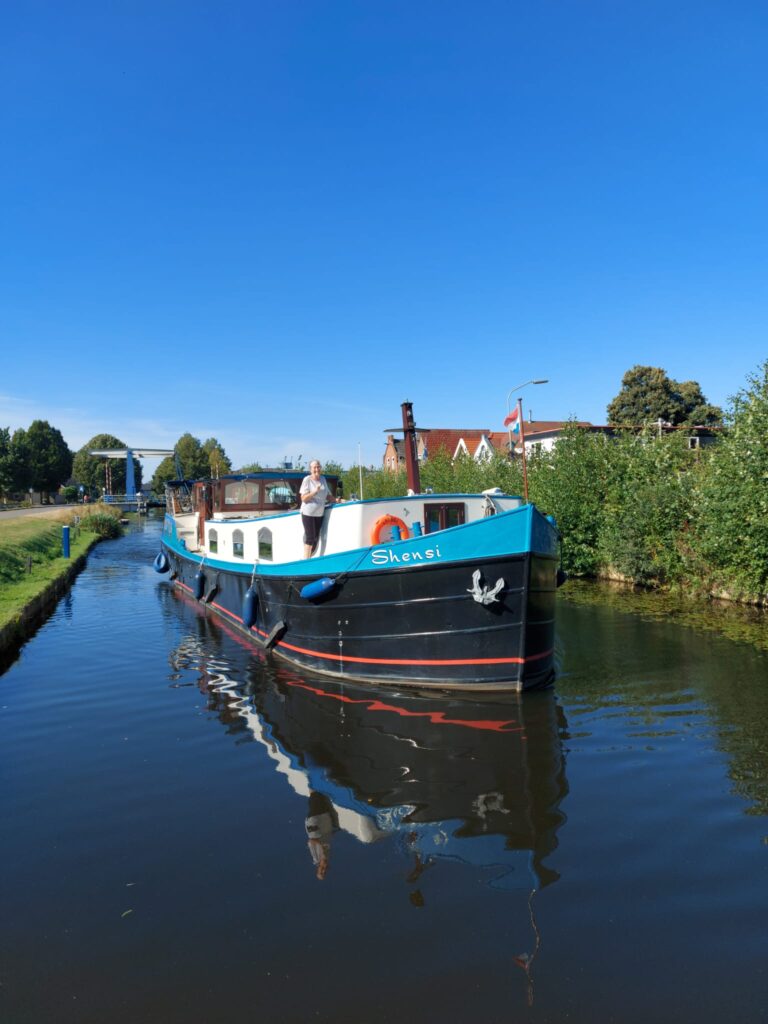
After coffee with Lineke and André, we set off again, now on the Stadt-Compasciumkanaal and continuing onto the Ter Apelkanaal. Aside from bouts of gusty wind which made passing through some bridges a little tricky, we made good time until we reached what turned out to be our final bridge of the day, which we found closed whilst it was being re-painted. That said, we only had to hang around for maybe another hour before being allowed through, and we continued on to Ter Apel, where we decided to stop for the night at our usual ‘corner’ mooring.
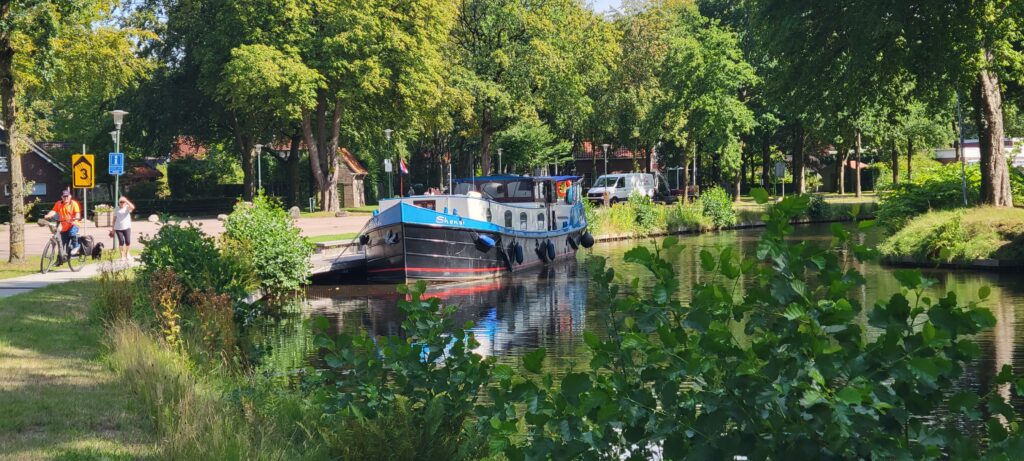
The next day we were ready to set off in a four boat convoy to head to Stadskanaal, which soon became a five boat convoy when we reached our first lock and a small boat was already inside waiting. We did not think we’d all get in, but the lock keeper moved the smaller boats around and we were squeezed in at the back – a tight squeeze, but it worked out in the end.
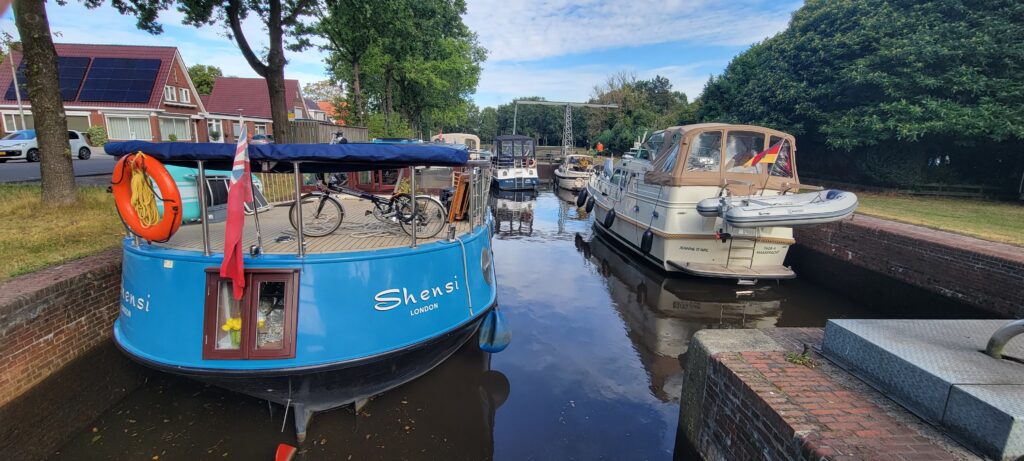
The rest of the day was somewhat easier as two of the larger boats dropped out, replaced by one cruiser. Arriving at the final lock of the day, we were greeted by friendly lock-keepers who pointed us to a mooring that they would personally hold for us, and so we ended our day tucked up once more in Stadskanaal.
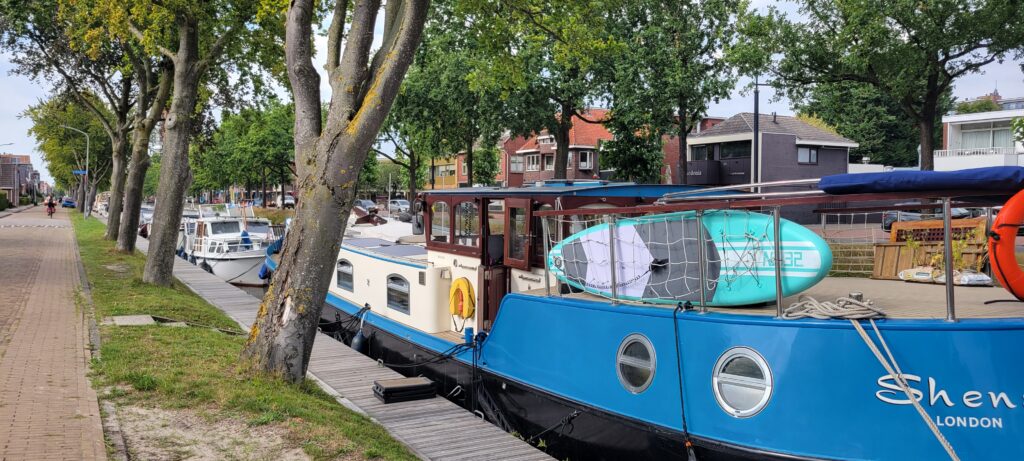
Now on 27th August, we had a busy, tiring day slowly moving along the Stadskanaal waterway and turning onto Oosterdiep, passing through thirty movable bridges and three locks (known as verlaats in that stretch of waterway) along the way, mostly all manually operated by the dedicated, friendly team. The weather was perfect for the trip, warm and sunny but not too hot, plus we managed to give Casper and Pip a couple of chances to get off and have a wee break, until we made the final turn at the bend into the town passentenhaven (locally known as Jachthaven Molenstreek), as ever hoping for a spare mooring and very happy to immediately see that there was a perfect spot between a couple of cruisers.
After tying up, I had a chat with the harbour master to confirm that we could indeed stay from now until April 2027 – a yes from him – after which we took the dogs round the corner to check that the car was still where we had left it at the beginning of the season – another yes, thank goodness!
On our way back we spoke to a few guys on a tug permanently moored right next to the town, and I was invited to share a beer or two with them – well, it would have been rude to say no – and as it turned out they were a good source of information and help, so definitely a worthwhile meetup.
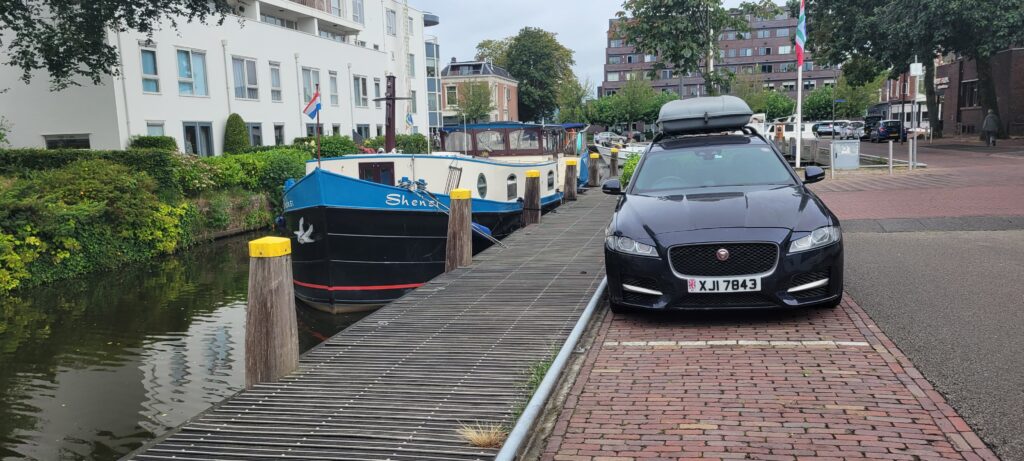
Now settled in Veendam, we had a week and a half until we set off on our next adventure – this time leaving Shensi behind and taking the car down through Europe to Caiscais in Portugal for a week’s holiday with Amy and Lucy, after which we would be driving across to the apartment in the Alps for a few weeks. But, I’m getting ahead of myself here … over the last couple of August days we spent our time cleaning up and sorting out Shensi, and generally preparing her for her imminent abandonment, and making sure the car was ready for the long trip to come in September.